Kelley A. Hays-Gilpin, Ph.D.
Associate Professor

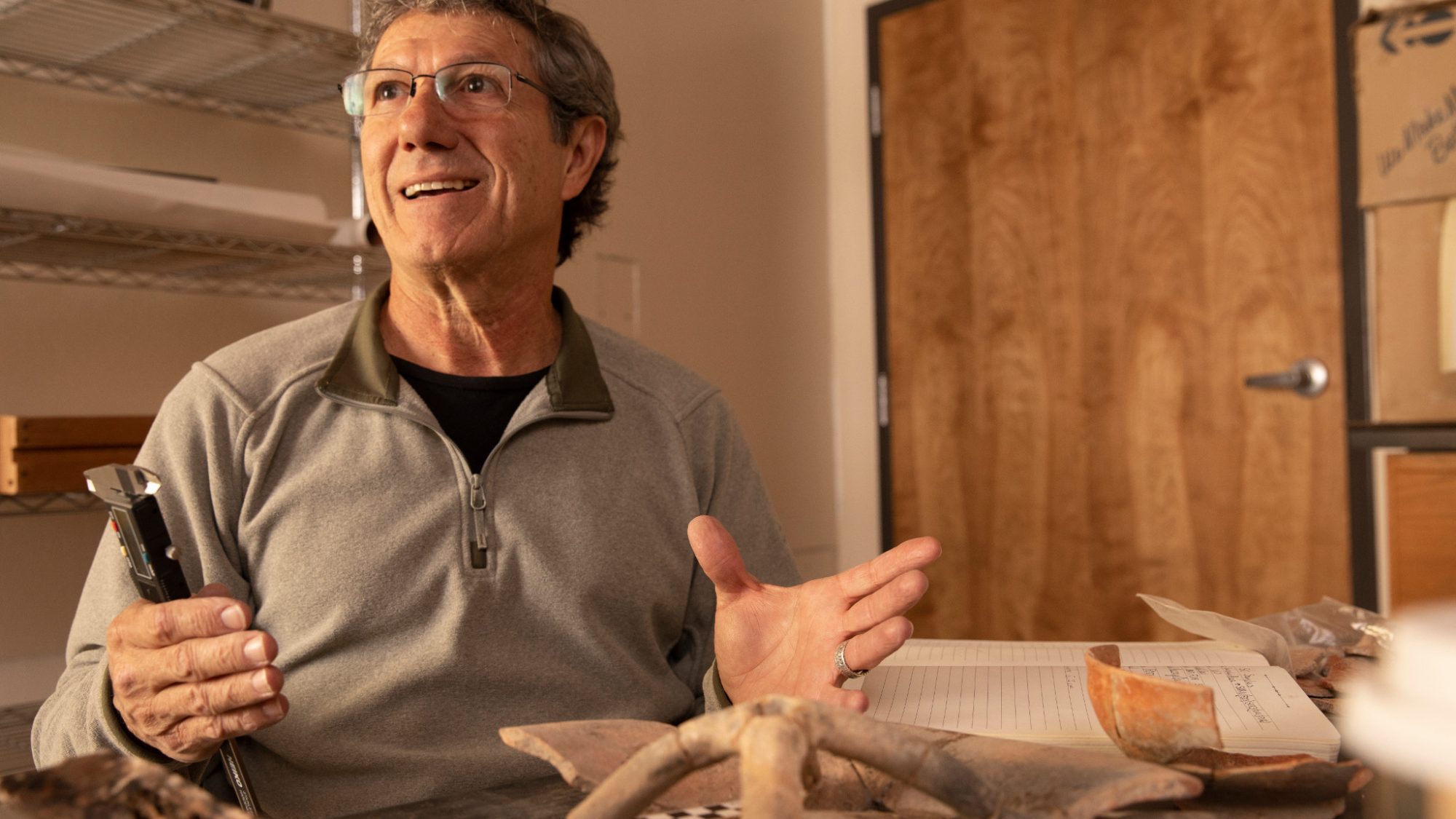
Photo credit Michele Mountain
(B.A., University of Michigan; M.A., Ph.D., University of Arizona 1992)
Archaeology, ceramics, visual arts, gender, rock art; U.S. Southwest
Dr. Kelley Hays-Gilpin is an Associate Professor and the
Contact Information:
Dr. Kelley Hays-Gilpin, PhD
Office: Bldg 98D, Rm 101D
Phone: (928) 523-6564
Email: Kelley.Hays-Gilpin[at]nau.edu
Current Research and Applied Projects
Hays-Gilpin’s current research, undertaken in collaboration with the Hopi Cultural Preservation Office, explores Hopi history and culture from prehistory to present through cross-media comparison of style and iconography (including but not limited to pottery, textiles, mural painting, rock art), visual and verbal metaphors, and gender arrangements. In addition, she and her NAU students regularly undertake service-learning projects such as last year’s Picture Canyon rock art mapping and management plan project, and this year’s “pottery north and west of the Colorado River” study, which includes planning a small conference for ceramic specialists working in the Arizona Strip, Grand Canyon, and southwestern Utah. Hays-Gilpin places a high priority on publications for both scholarly and popular audiences. Her most recent book, Ambiguous Images: Gender and Rock Art, won the 2005 Society for American Archaeology Book Award. She recently edited two issues of MNA’s Plateau Magazine on rock art, kiva murals, and painted pottery of northern
The Hopi Iconography Project led Hays-Gilpin to an interest in borderlands archaeology, and long-term, long-distance connections between the Southwest and
Over the past three years, her attention to archaeological method and theory has been directed toward the increasingly important topic of archaeology of religion. She editing a volume entitled “Belief in the Past: Theorizing an Archaeology of Religion,” with D.S. Whitley, and writing an article on archaeology of religion in the
At the Museum of Northern Arizona (MNA), Dr. Hays-Gilpin directs the Hopi Iconography Project, a collaboration between the museum and the Hopi Tribe’s cultural preservation office. They are exploring Hopi cultural continuity through pottery, rock art, mural painting, and fiber perishables, including baskets and textiles. Archaeologists, cultural anthropologists, and art historians are working together with Hopi artists, language specialists, archaeologists, and other cultural specialists to study nearly two thousand years of Hopi history, values, aesthetics, technology, subsistence, and artistic expression. Archaeologists usually study the past for its own sake, but they are trying to understand the meanings of the past in the present, and how distinctively Hopi ways of thinking about ecology, health, and community values have been expressed in material culture over centuries if not millennia. Most important, they want to explore ways that Hopi traditions can help shape a sustainable future for Hopi communities and beyond, through subsistence farming, craft production, public health programs, and cultural revitalization. In some ways, it’s more important to Hays-Gilpin that ancient objects do have significance for contemporary indigenous people, and less important what the exact meanings of ancient symbols are—so it’s less about reading the past like a text, and more about having a conversation in the present about ancestors, sacred places, and making aesthetic and emotional connections between past and present. It’s about being able to hear messages from the past that help us live better lives today—whether it’s how to grow food in the desert, how to have a healthy diabetes-resistant diet, how to deal with drought, how to continue one’s cultural heritage in new artforms, or how to help outsiders understand and appreciate one’s art heritage. Thus far, Dr. Hays-Gilpin’s research with project has resulted in four scholarly articles and book chapters and two issues of MNA’s Plateau magazine.
Southwest Pottery Traditions
Dr. Hays-Gilpin also directs traditional archaeological research on pottery traditions in the northern Southwest, in collaboration with our national parks, forests, and other agencies, tribes, and museums. Graduate student service projects that she has directed include a web-based field identification manual for Pueblo IV period decorated pottery from the
© 2009 Arizona Board of Regents.
Northern Arizona University, South San Francisco Street, Flagstaff, Arizona 86011
Powered by ActiveCampus™ Software